
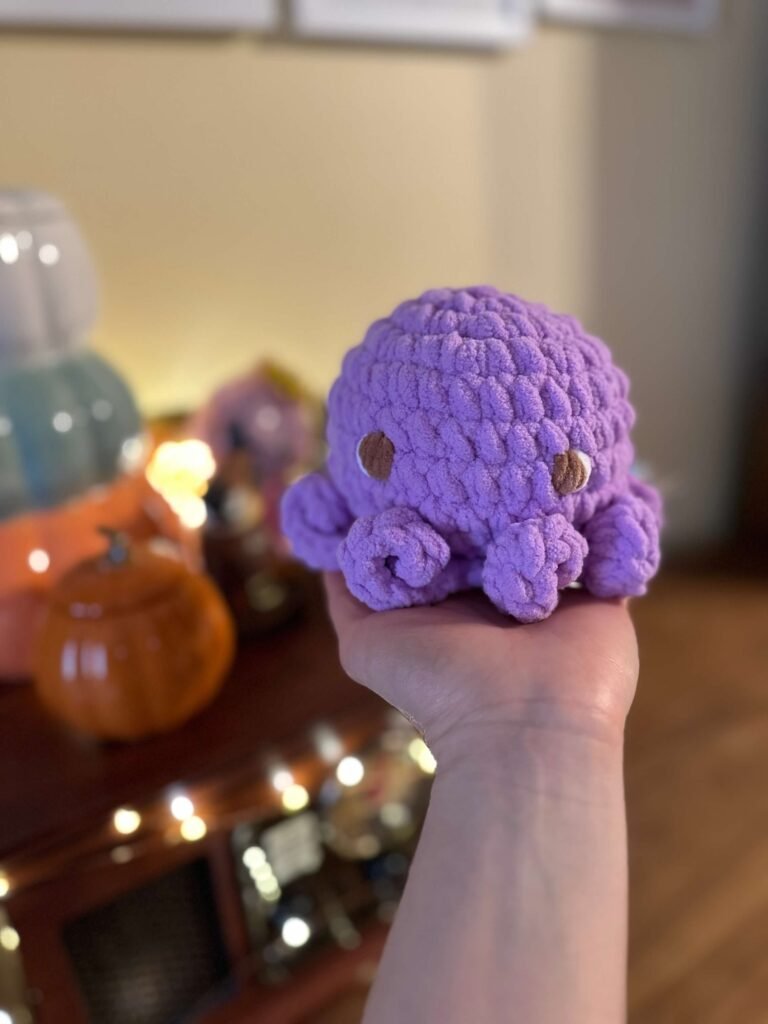
There is a sort of joy that you feel when your child looks at what you are crocheting and says, “Can you teach me?” You immediately envision cozy afternoons with your child, side-by-side on the couch and talking about what project you are going to start next.
But then, reality sets in.
If you’ve ever tried to teach kids how to crochet—or learn any traditional craft for that matter—in the digital age, you know it’s a real struggle. These kids grew up with AI, screens everywhere, iPhones and automation at their fingertips. They get bored very easily and want instant gratification with everything they do. If something is not going their way, they might decide to move on quickly to the next thing. It’s hard to keep that crochet spark alive when you have an iPad on standby. Here’s a little look at the modern battle between the hook and the screen and how a Gen Alpha kid can completely change the game.
Round 1: Trying to Teach Kids How to Crochet vs. The Screen
Many of us try to introduce the craft at an early age. I started when my now 10 year old was around 3 or 4. Around this age, fine motor skills are developing, and they love mimicking what Mommy or Daddy is doing. But at that age, keeping their attention is an uphill battle, especially when inside the house. Let’s be honest—for those of us whose kids were drawn in by Blippi and YouTube videos, the internet is a formidable opponent.
Unless kids are running around outside burning off energy, the siren call of the screen is incredibly strong. Indoors, it often feels like unless you actively enforce a “screen away” rule, traditional crafts and drawing get benched. Aside from a family board game or card game, the digital world just delivers dopamine faster than a single crochet stitch ever could.
When you’re competing with bright lights, dancing and singing characters, the slow pace of crochet can feel like a chore to a little kid. So, the hooks get put away, the yarn goes back to Mommy’s stash and the craft gets forgotten. You wonder if they’ll ever pick it up again.
The Turning Point: Schoolyard Crochet Culture
Sometimes, the secret ingredient to getting a kid to love a craft isn’t the parent at all – it’s peer influence and environment.
A shift often happens when school steps in to champion creativity. When classrooms make space to teach kids how to crochet through tactile maker-spaces, something amazing happens: peer influence takes over. Imagine a classroom where free time doesn’t mean logging onto a device, but exploring a maker-space filled with tactile options. This is how my kids’ school is. They promote learning in a way that sparks their creativity. My daughter was part of a crochet club created by her teacher and I thought that was so wonderful. When schools provide yarn, hooks and the freedom to create, something amazing happens: crochet becomes cool. At a time when crochet is still pretty trendy, my daughter’s classmates are also learning to crochet and this helps a lot in terms of keeping her interest in the craft.
Seeing friends crochet changes the dynamic entirely. It’s no longer just “Mommy’s hobby”; it’s a social activity. Lately, a renewed interest can spark simply because they are crocheting in a group, trading techniques and sharing yarn.
The Summer Goal: Just One Thing
Now that my daughter is more interested in crocheting, a new challenge begins: maintaining that momentum over the summer break without the daily structure of school and friends to fuel it.
The struggle to keep her attention span locked onto a project long enough to finish it is incredibly real. When a project takes more than twenty minutes, a child’s focus can easily drift back toward the iPad or the TV.
The strategy when you teach kids how to crochet this summer? Keep expectations microscopic, but meaningful.
Instead of aiming for a massive blanket or a plushie, the goal is simple: finish exactly one thing.
Whether it is a bookmark, a little ornament or a headband, completing a single project from start to finish builds an immense amount of accomplishment. Once they have that one finished piece in their hands, the craft shifts from a temporary activity to a lifelong skill they know they can master.
To everyone out there fighting the good fight against the screens this summer: Wish us luck. May the yarn tension be just right, and the hooks win out over the tablets, even if just for one row a day.